Japan · Asia
Guide to Kyoto
Temples, sakura, and the slow-travel rhythm of East Asia
Overview
Kyoto is Japan’s cultural heart: wooden temples, Zen gardens, and walkable neighborhoods. Perfect as a first-timer’s basecamp for a slower pace than Tokyo.
Highlights
Fushimi Inari
Orange torii gates winding up the mountain. Arrive before 8 AM for solitude. Wear comfy shoes—it’s a long climb.
Arashiyama
Bamboo grove + Hozu River. Pair with the monkey park or a half-day boat trip.
Gion & Higashiyama
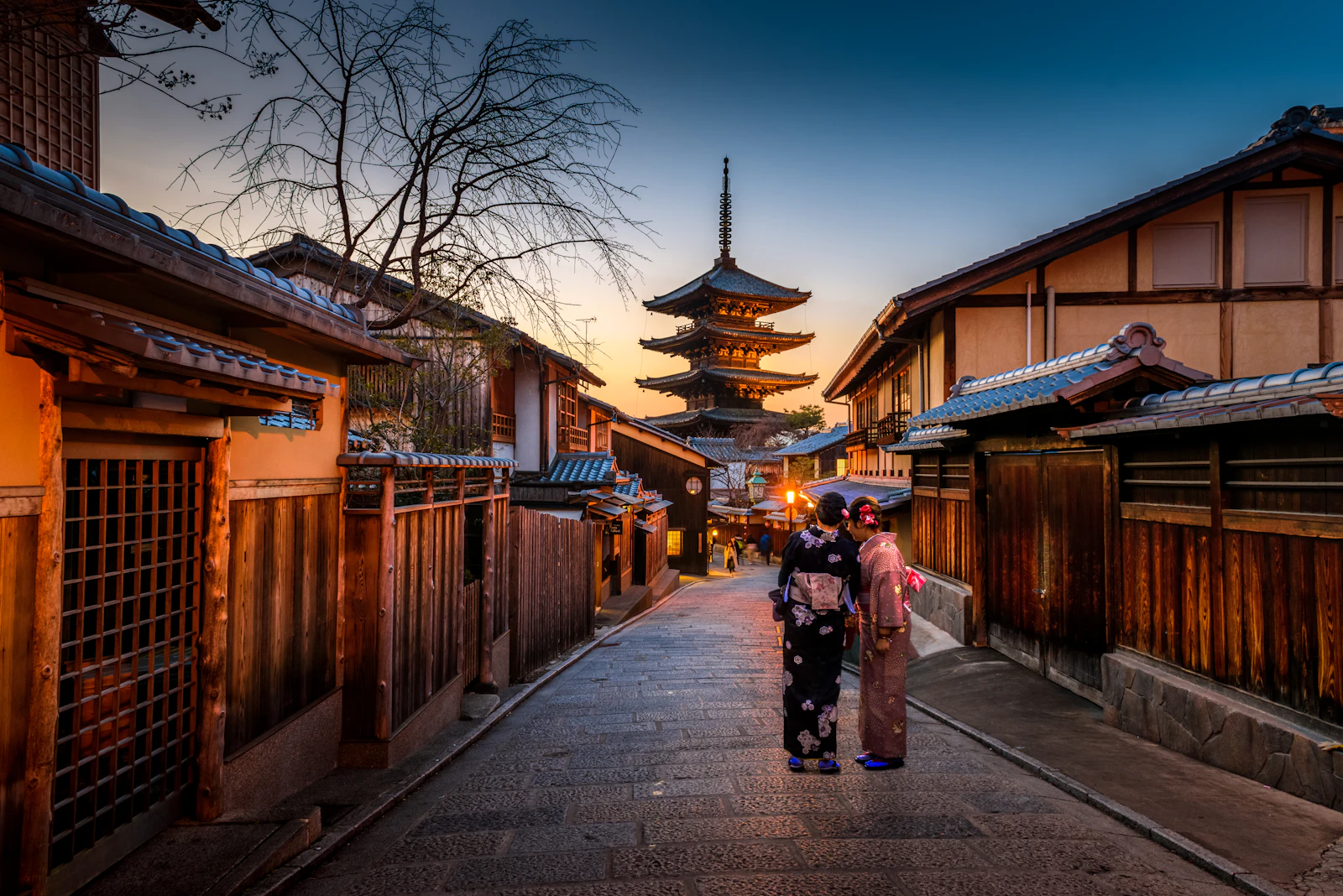
Geisha district and stone alleys. Best at dusk; respect private areas—don’t disturb maiko.
Kinkaku-ji
Iconic Golden Pavilion. Buy a multi-temple pass to save on entry to several sites.
Philosopher's Path
A canal-side path ideal for a slow stroll, especially during sakura season.
Food
Kaiseki
A formal multi-course meal. Try it in Gion or at a ryokan—book ahead.
Nishiki Market
Local snacks: pickles, silky tofu, matcha sweets. Great for a light lunch.
Ramen & yudofu
Warm, budget-friendly bowls near the station. Yudofu (boiled tofu) is Kyoto’s signature silky dish.
Getting around
IC card
Suica/ICOCA for buses + subway. Kyoto buses get packed at peak times—plan your route.
Bicycle
Daily rentals are plentiful; the city is fairly bike-friendly except for the hill temples.
JR day trip
Nara / Osaka are 30–60 minutes away by JR. Buy separate tickets if you don’t have a pass.
Frequently asked questions
What time do Kyoto’s temples and gardens close?
Most temples open around 9 AM and close at 4 or 5 PM, with ticket sales ending 30 minutes before. So don’t schedule Kinkaku-ji or Ginkaku-ji for the afternoon. Exceptions: Fushimi Inari’s torii path is open 24/7, and Kiyomizu-dera has seasonal night openings.
Base in Kyoto or Osaka?
If temples and traditional vibes are your focus, stay in Kyoto near Kyoto Station, Karasuma, or Gion to beat the crowds in the morning. Osaka is cheaper with a livelier nightlife, and the Special Rapid train covers the 30-minute gap. For trips under five days, switching hotels usually costs more time than it saves.
How to get around Kyoto?
Kyoto relies more on city buses than subway, and routes to Arashiyama or Kinkaku-ji often fill up. Load a Suica or ICOCA card and tap as usual. Day passes for buses have been discontinued, so pay per ride. For mid-range distances, combining Keihan or Hankyu trains with walking is far faster.
Can you photograph geisha in Gion?
Not in private alleys. Some small lanes in Gion ban photos with fines, and chasing maiko for selfies is considered extremely rude. Shoot from a respectful distance on the main Hanamikoji Street—never block the path. For close-ups, join a paid session with professional performers or rent a kimono yourself.
When are Kyoto’s sakura and momiji, and how crowded is it?
Sakura typically bloom from late March to early April; momiji peak from mid- to late November. Both seasons are stunning but also the busiest and priciest—book hotels three to six months ahead. Survival tip: start by 7 AM and opt for outlying temples like Ohara instead of iconic spots.
Are there halal food and prayer spaces in Kyoto?
Options are limited compared to Tokyo. A few halal-certified ramen and kaiseki restaurants can be found near Kyoto Station and Kawaramachi, and the Kyoto Muslim Mosque near Kyoto University campus provides a prayer space. Many travelers opt for the temple’s traditional vegetarian shojin ryori, which is naturally meat-free.